The post Summer Never Ends with the Free Standing Cupola Patio Heater appeared first on Brandline Products.
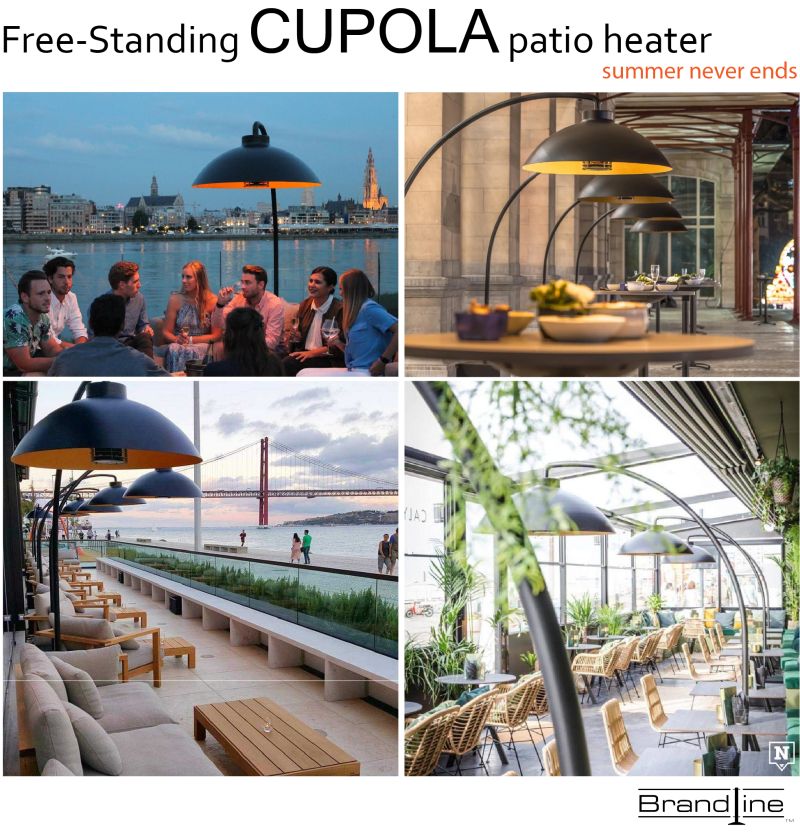
]]>- The elegantly designed Cupola Patio Heater not only serve a functional purpose but also enhance the aesthetic appeal of your outdoor space.
- By providing a harmonious combination of light and warmth, they elevate your outdoor experience, allowing you to enjoy the beauty of nature while remaining comfortable.
- The versatility of these stylish heaters is evident in their availability in both free-standing and wall or ceiling-mounted configurations, making them suitable for a variety of outdoor environments.
- With an impressive heating radius of up to 5 meters, they effectively distribute warmth, creating a cosy atmosphere that invites relaxation and conversation, all while being mindful of energy efficiency.
- Each Cupola Patio Heater model is thoughtfully designed to accommodate gatherings of up to six individuals around a table, making them an ideal choice for summer soirées or intimate dinners beneath the stars.
- By transforming your outdoor area into a welcoming retreat, these heaters allow for seamless interactions and enjoyable moments with friends and family.
- Furthermore, their environmentally conscious design, characterised by low energy consumption and zero CO2 emissions, ensures that you can indulge in the pleasures of outdoor living while maintaining a commitment to sustainability.
#patio #stylish #terrace #heater #summerevening #infrared #patioheaters #commercialpatioheaters #outdoorheaters #brandline
The post Summer Never Ends with the Free Standing Cupola Patio Heater appeared first on Brandline Products.
]]>The post Baylis Forigo Café Planter appeared first on Brandline Products.
]]>- We collaborated closely with the renowned consultancy Grape Design to create the Baylis Forigo Café Planter. Grape Design has received multiple awards for its innovative work, together we had the task to undertake a project focused on enhancing a golf club’s aesthetic appeal.
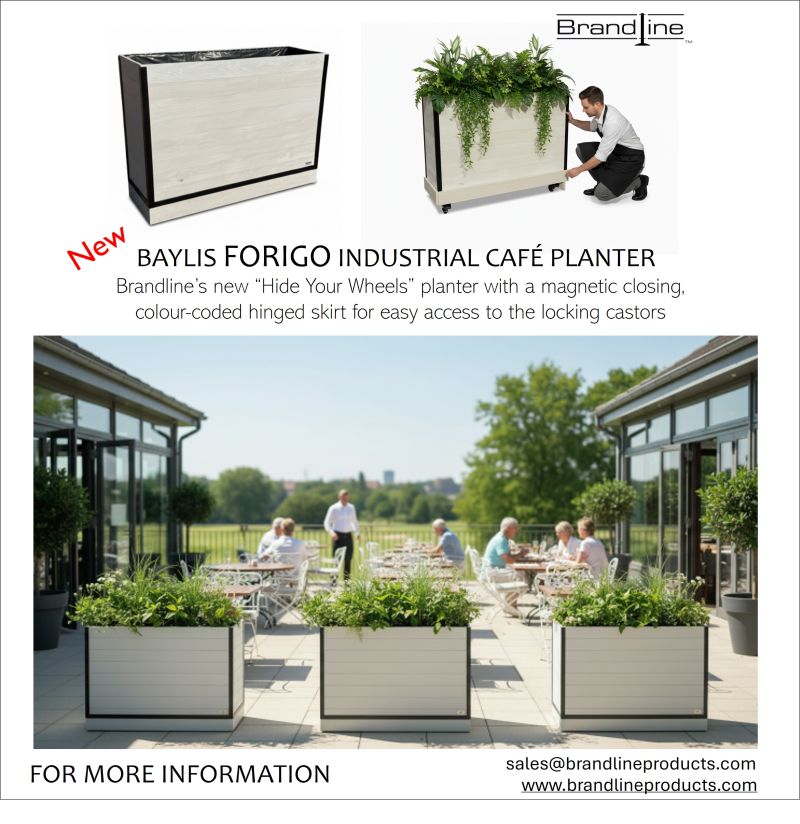
- Our task involved modifying our popular Baylis Industrial Café Planter to incorporate a magnetic closing mechanism and a hinged skirt.
- This design adjustment was essential to effectively conceal the locking castors while ensuring that users could still easily access the brakes when needed.
- The result is a seamless blend of functionality and style, tailored specifically for the upscale environment of a golf club.
- In terms of aesthetics, the planter is finished in a sophisticated Muted Clay stain, complemented by a secondary Limed Wax treatment that adds depth and character to the wood.
- This combination not only enhances the visual appeal of the planter but also ensures durability and resilience against the elements, making it an ideal choice for outdoor settings.
- The thoughtful design and high-quality materials reflect our commitment to creating products that meet both practical needs and design excellence, aligning perfectly with the vision of Grape Design for this prestigious project.
#planter #skirt #wheels #hide #wood #design #waxing #commercialplanters #ukmade #bespokeplanters #woodenplanters #cafeplanters
The post Baylis Forigo Café Planter appeared first on Brandline Products.
]]>The post Furniture Highlights 2026 appeared first on Brandline Products.
]]>
Furniture Highlights 2026
It’s that time of year again — the perfect moment to refresh your outdoor terraces in preparation for a busy summer season.
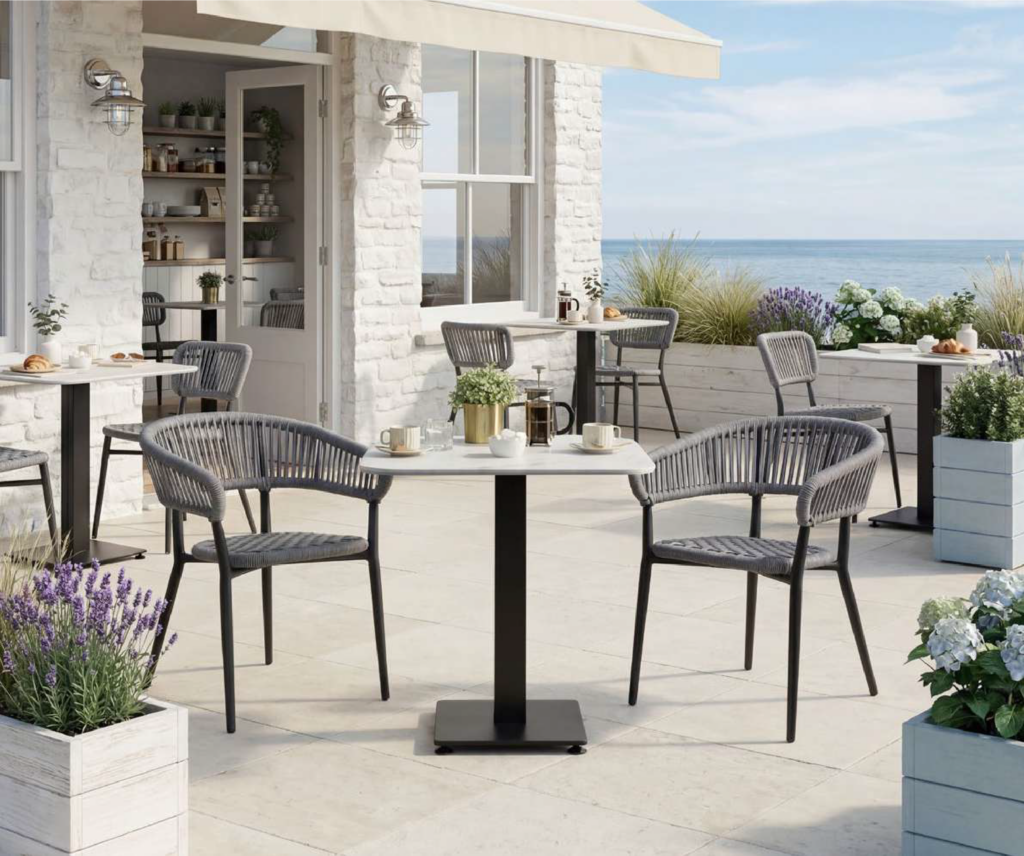
To make it easier, Brandline has highlighted a selection of our best-selling and most talked-about tables and chairs, all in stock and ready to go for the 2026 season.
And if your project extends indoors, you’re not left out — we also carry a wide range of stylish indoor furniture, available for immediate delivery.
Explore the collection today and ensure your space is ready to impress when the warmer months arrive.
Click here or on the image above to explore our 2026 Indoor & Outdoor Furniture Highlights.
The post Furniture Highlights 2026 appeared first on Brandline Products.
]]>The post Mowgli Bespoke Wooden Bench appeared first on Brandline Products.
]]>
-
The Mowgli Bespoke Wooden Bench is a meticulously hand-crafted and custom-designed piece of furniture that has recently been delivered to the lively and authentic “smash & grab” street-food restaurant chain.
-
This establishment is renowned for its unique interior aesthetic, which features signature swing seats, enchanting fairy-light canopies, and inviting, informal dining areas that create a vibrant atmosphere for patrons.
-
Spanning an impressive 4.3 meters in length, the bench was thoughtfully engineered and constructed in two sections to facilitate seamless integration into the restaurant’s layout.
-
This careful planning ensures that the bench not only fits perfectly within the designated space but also enhances the overall design and functionality of the dining area, allowing for a comfortable and enjoyable experience for guests.
-
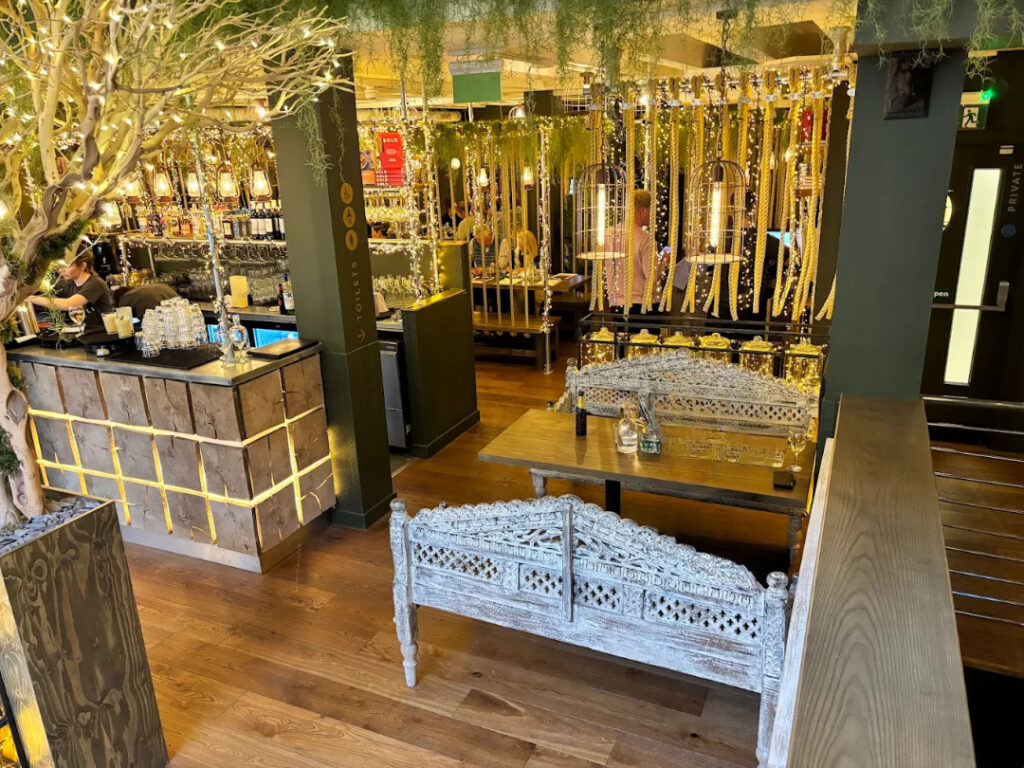
This bespoke wooden bench marks the latest addition to a collection of Indian-themed seating solutions crafted by Brandline for Mowgli.
-
It stands out as the longest and most ambitious design to date, showcasing the brand’s commitment to quality and creativity.
-
For reference, an image of a previous bespoke bench created for Mowgli’s Newcastle location is available, illustrating the evolution of design and craftsmanship in this ongoing collaboration.
- Contact [email protected] for any bespoke Indian themed furniture requirements
- #benches #Indian #crafted #seating #furniture
The post Mowgli Bespoke Wooden Bench appeared first on Brandline Products.
]]>The post Giant Umbrellas are Powerful Revenue Drivers appeared first on Brandline Products.
]]>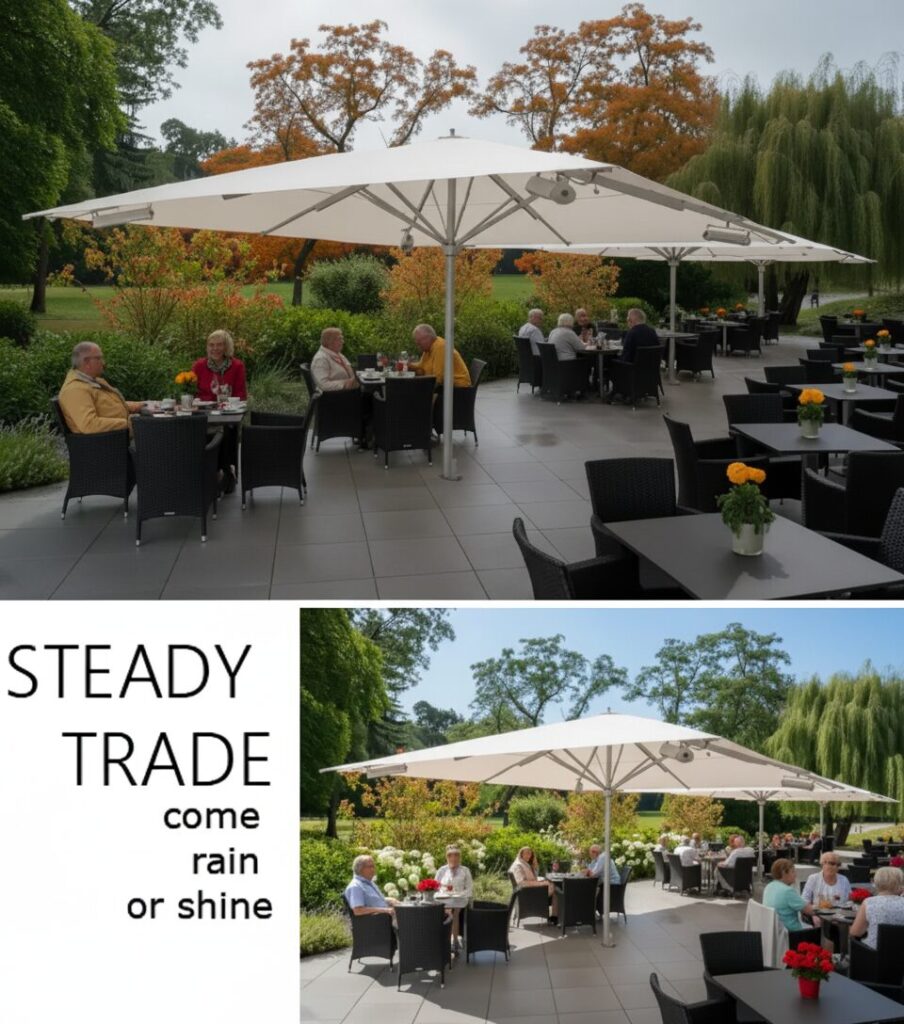
No matter the weather, your outdoor space can thrive! At Brandline, our Giant Umbrellas are designed to help pubs, restaurants, cafés, and hotels enhance their alfresco dining experience throughout the year. These stylish, commercial-grade umbrellas are built to withstand the elements, protecting your guests from sun and rain while creating an inviting atmosphere.
- Extend Your Trading Season: Our high-quality umbrellas allow your business to use outdoor seating year-round, not just in summer. Avoid losing bookings due to unpredictable weather by shielding guests from rain, wind, and even light snow.
- Increased Seating Capacity: Utilise previously unusable areas like pavements or gardens by adding umbrellas. This can increase total seating capacity by up to 30%, directly boosting your daily revenue.
- Longer Customer Stays: A comfortable customer will stay longer and spend more. Shaded areas are often 10–15 degrees cooler in summer, while integrated heaters and LED lighting keep guests comfortable after dark or in winter. Relaxed customers stay sat, leading to more orders of drinks, desserts, and sides.
- Visual Advertising & Foot Traffic: Giant umbrellas act as “street-level billboards”. Custom branding with logos and vibrant colours makes your establishment stand, grabs the interest of passersby, and builds brand recognition.
- Cost-Effective Alternative to Construction: Installing giant umbrellas can be significantly cheaper than building permanent extensions or awnings. They offer the same protection but with the flexibility to be moved or stored as layout needs change.
Prepare now for the upcoming summer rush and ensure your outdoor space is set for success! Rain or shine, your outdoor space should always be open for business! Brandline giant umbrellas help pubs, restaurants, cafés and hotels make the most of alfresco dining—all year round.
- Choose from sizes ranging from 2.0×2.0m to 8.0×6.0m
- Options include square, rectangular, and round designs
- For bespoke sizes & shapes we offer our Freestyle option
- Customise with branding, valances, lighting, heating & automatic features
- Select from free-standing, in-ground or Gabion weighted bases with seating options
The post Giant Umbrellas are Powerful Revenue Drivers appeared first on Brandline Products.
]]>The post Retractable Barriers – Custom Tape appeared first on Brandline Products.
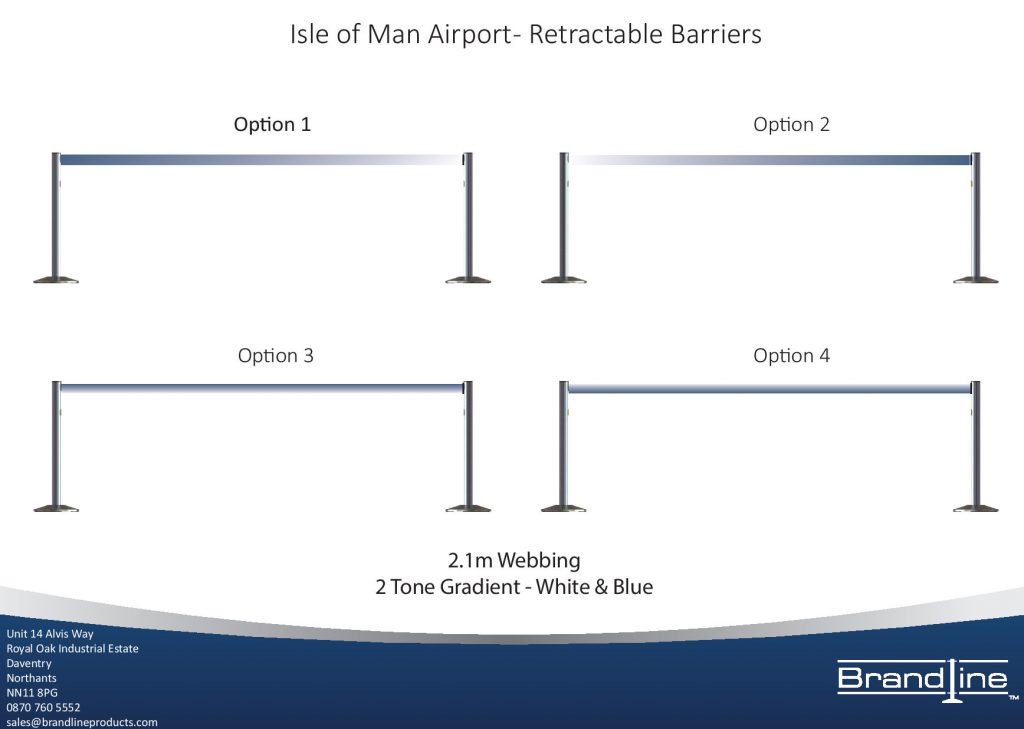
]]>We came up with 4 different designs phasing each colour from one branding to another. The authorises selected Option 3 and Option 4. Having be in retractable barrier manufacturing for over twenty years, we recommended that option 3 should be selected as having the darker colour at the top of the tape would be less likely to show stains or dirt from those queuing.
The post Retractable Barriers – Custom Tape appeared first on Brandline Products.
]]>The post Wooden Café Barrier Panels appeared first on Brandline Products.
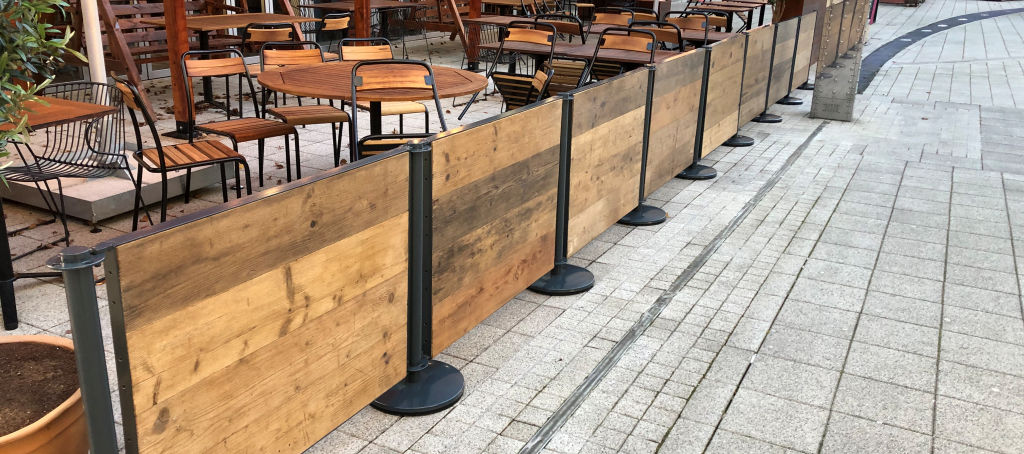
]]>- Brandline Products has established itself as a leading provider of wooden café barrier panels, which have gained popularity among numerous clients seeking effective café barrier systems.
- These panels are crafted within a treated mild steel frame, allowing for a range of timber options to suit various aesthetic preferences.
- Among the selections, the reclaimed scaffolding boards stand out as the most favoured choice, offering a distinctive weathered and rustic appearance that seamlessly integrates into diverse environments, enhancing the overall ambiance of your restaurant, café or bar.
- Primarily designed for outdoor use, these wooden panels serve the essential function of delineating alfresco seating or dining areas.
- Their straightforward assembly process makes them an attractive option for establishments looking to create a welcoming outdoor atmosphere.
- Built to withstand the elements, the wooden café barrier panels are robust and come with the assurance of Brandline Products’ quality guarantee, ensuring that clients receive a durable and reliable product.
- Additionally, the panels can be customised with a variety of finishes, allowing businesses to align them with their branding and design preferences.
- Brandline Products offers two distinct types of wooden panels to cater to different needs: the heavy-duty 40mm framed panels and the newly introduced lightweight 25mm framed panels.
- Both options are treated for external use, ensuring longevity and resilience against weather conditions.
- This versatility in design and functionality makes the wooden café barrier panels an ideal choice for any establishment looking to enhance its outdoor dining experience while maintaining a stylish and inviting atmosphere.
- Please get in touch for more information – [email protected]
The post Wooden Café Barrier Panels appeared first on Brandline Products.
]]>The post Wrought Iron Products appeared first on Brandline Products.
]]>Durable and Long-Lasting
Wrought iron products are made primarily of iron but with a little bit of carbon, this makes it very strong but also malleable enough to be turned into scrolling shapes. One of the main advantages of wrought iron is how long it lasts. Wrought iron should be painted every ten to fifteen years, but if kept in good shape it will last many times that. Even if wrought iron begins to rust, it will take many years to compromise the integrity of the iron, and many people even prefer the aged patina of rusted wrought iron. Compared to timber, the longevity of wrought iron is clearly worth the little bit of maintenance it requires.
Strong and Secure
The same strength that makes wrought iron last a long time also makes it perfect for security. That’s why it’s not unusual to see security fences and gates made of wrought iron or of a brick wall with wrought iron fencing at the top. When you’re looking for a strong and reliable material, wrought iron is the perfect choice.
Classic Appearance
Since it has a very traditional appearance, wrought iron lends any venue a classic look, reminding passersby of the grace and beauty of bygone eras.
Unobtrusive
Compare the classic beauty of a wrought iron cafe barrier panel to the standard opaque panels that are currently found. When paired with a well designed alfresco area, nothing beats the classic beauty of wrought iron . Wrought iron is so much more pleasing because its open design allows the eye to pass through it and focus ambiance of the outside dining area.
UK manufactured
Another advantage of our wrought iron panels is that they are designed and manufactured in the UK. Generally, the wrought iron panels and wrought iron planters are not produced in a large quantity and therefore it is not advantageous for any company to source the product in the far reaches of Asia.
Wrought iron maintenance.
Our Wrought iron products are constructed from iron, and steel, comes in two common forms. Firstly, it can be ‘wrought’, where its heated and hammered into the shape you want. Secondly, it can be ‘cast’, whereby its heated to liquid form and poured into moulds to create a solid piece. Most metals, with the exception of aluminium, are susceptible to rust. However, to prevent this, our wrought iron panels and planters are finished with layers of clear varnish, paint, lacquer or a durable powder coating, to add strength and protect the furniture from the elements.
To ensure longevity , regular cleaning is advised. Generally, most metals can be cleaned by simply using a little mild washing up liquid diluted with warm water. Sponge clean the panels or planters to remove any built up dirt, rinse with cold water, and then leave it to dry in the sun.
As iron and steel are susceptible to corrosion, particularly rust, ensure any chips are treated as soon as possible to avoid any future problems.
The post Wrought Iron Products appeared first on Brandline Products.
]]>The post The Wooden Cafe Barrier Posts appeared first on Brandline Products.
]]>This blog explains everything you need to know about the Rustic wooden cafe barrier post.
The Rustic Wooden Cafe Post
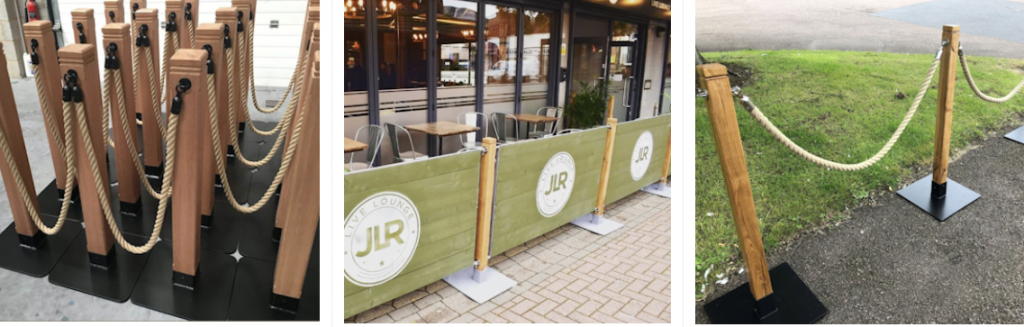
Our standard and most common rustic wooden posts are manufactured in 90mm and 75mm oak post size. Oak Cafe Posts are not only heavier, but also stronger and much more durable. Oak timber makes it a perfect material for exterior uses, as it can withstand the variable UK weather conditions and will also resist the other forces of nature, such as fungal and termite attacks, as well as moisture. Oak is one of the most recognized woods, it’s remarkable strength and hardness is unquestioned within the woodworking community. For centuries, the countless varieties of this hardwood have carved their way into history, serving as planking for Viking long-ships and interior paneling for the House of Commons.
When we purchase oak timber for the Cafe Barrier Wooden Posts, we buy it from the mill in three-meter lengths. They are sawn finished. After we’ve routed, sanded and cut the post to size, they are stained, painted, or clear coated to the clients specification.
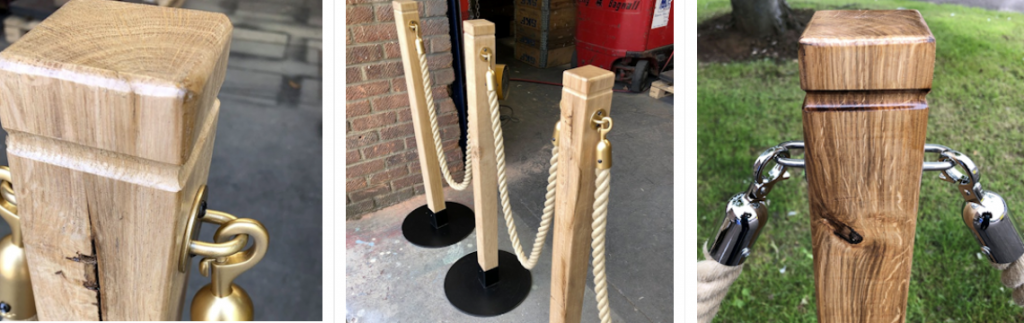
Rustic posts with alternative panels
Our Rustic Wooden Cafe Barrier Posts are versatile. Whether for barrier rope, canvas banners, wooden panels, or wrought iron. Our Rustic posts can be used for any Brandline Product Banner or Panel.
Post Clips
Dependant on your application, whether you would rather use your wooden cafe barrier posts with barrier ropes or cafe panels, we will change the post accordingly. We can also amend the colour of the accessories to suit your requirement. All clips are manufactured in marine grade stainless steel to avoid corrosion.
The post The Wooden Cafe Barrier Posts appeared first on Brandline Products.
]]>The post Printing on Wood – Stencil appeared first on Brandline Products.
]]>- Stencil
- Digital
- Vinyl Application
- Burning
In this blog we’re primarily looking at how to stencil a logo or artwork on to our wooden cafe barrier panels or planters.
Many Graffiti artists tend to use stencils. Some of the more famous ones are, of course, Banksy, and Blek le Rat . This is primarily because applying stencils is quick and they allow the artist to produce the artwork and leave almost instantly. Stencil graffiti is a form of graffiti that makes use of stencils made out of various media to create art that can be replicated easily. The design is cut out of the media and then the image is transferred to a surface through the use of roll-on paint or spray paint.
Advantages of Stencils
The advantages of using a stencil are:
a) Low cost set up.
b) Crisp images.
c) UV Stable. (Dependant on the sprays or paints)
d) Does not damage the sub material.
e) The quantity manufactured does not usually affect the price.
The disadvantages are:
1. Designs can be limited.
2. Colours can also limited.
Brandline products recommend using stencils for simple logos or messages. Just in case you fancy taking on the stencil yourself, we have listed a step by step instruction.
How to Stencil on Timber
In order to stencil a logo or message on a wooden panel, the following process is undertaken.
Ensure the surface is free from dust, and is smooth, clean and flat.
A light sanding is perfect if you can apply a clear coating to protect both the print and the timber once set in location.
Manufacture the stencil.
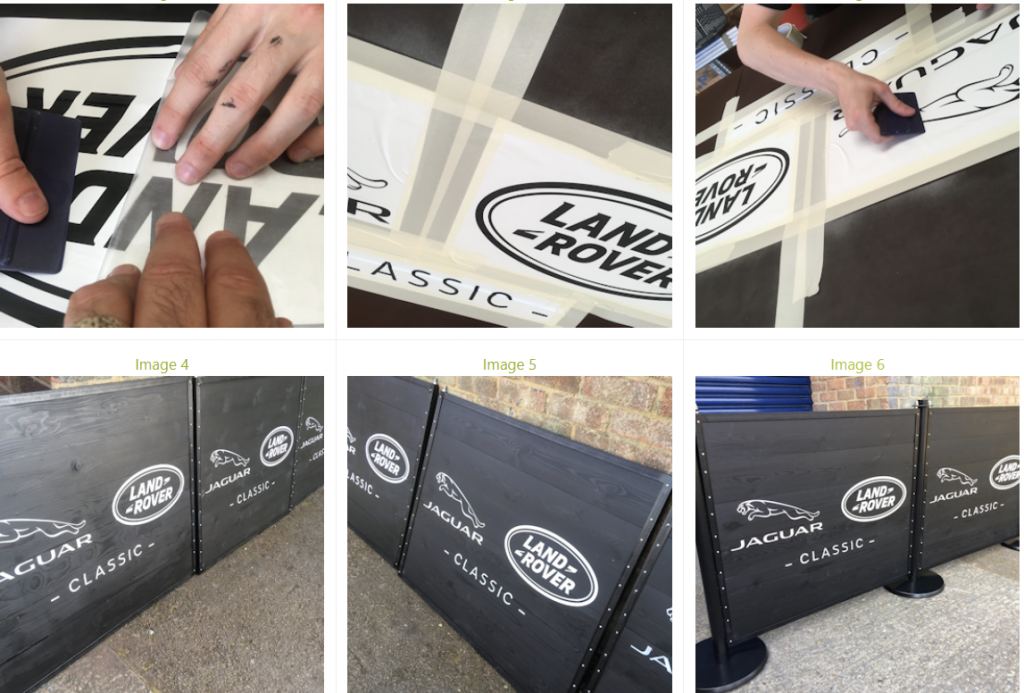
Using as light weight a vinyl as possible, manufacture the stencil. Now, nearly all vinyl comes with an adhesive backing on it. The adhesive backing is rated as to the adhesion strength. We use a standard, medium-tac vinyl, which, once we have agreed the artwork with the client, we cut to shape. To do this we use a digital vinyl sign cutter which is powered by a digitally controlled servo system and an accu-alignment system. This ensures it allows for precise contour cutting by detecting the registration marks. However, don’t panic, for this process, our vinyl cutter is a little over kill! A standard vinyl cutter is absolutely fine. Once the vinyl has been cut, and you have picked all the parts you don’t need, you can apply the application film to it. The application film is a clear film that you apply to the face of the vinyl which allows you to remove the adhesive backing of the vinyl. You need to do research here. Make sure the application adhesive is slightly stronger than the backing adhesive, but not strong enough to spoil the seal between the vinyl and the timber.
Apply the vinyl to the timber.
Once the vinyl backing is removed, you can apply the finished stencil to the timber. Ensure that the stencil is applied fully and remove the application film slowly. (See image 1) Pull the application film back on itself to gradually roll it off whilst using a squeegee, pushing the vinyl on to the timber.
Masking.
Mask off the uncovered parts that you do not want any over-spray to be on. (See image 2 and 3).
Spraying.
Now the fun part! Using a spray paint of the required colour, just a rattle can will do, spray the stencil from above. Remember the further away you keep the spray nozzle. the better. A thin coat will allow you to apply several coats over a short time. Do not use too much spray. This will cause runs.
Removal of Stencil and Masking.
Once you have sprayed the stencil, be patient. Wait a few minutes and then remove the stencil and the masking you have used. You may have to touch up the artwork at this point. (See image 4 & 5)
Coat the timber.
A good external clear coat will provide extra protection. (See image 6)
Repeat as necessary!
The post Printing on Wood – Stencil appeared first on Brandline Products.
]]>